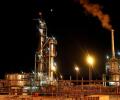
India, the world's third largest oil importing and consuming nation, is likely to save as much as Rs 1.8 lakh crore on import of crude oil and LNG if the trend of softening international energy rates continues, Icra said Wednesday. India, which meets over 85 per cent of its crude oil needs through imports, spent $242.4 billion on buying crude from overseas in the fiscal year ended March 31, 2025.

Jet fuel (ATF) price on Wednesday was hiked by 4 per cent in line with firming international oil prices but petrol and diesel rates remained on freeze for a record 10th month in running. Aviation turbine fuel (ATF) price was increased by Rs 4,218 per kilolitre, or 3.9 per cent, to Rs 1,12,356.77 per kl in the national capital, according to a price notification of state-owned fuel retailers. The increase follows three rounds of reduction since November.

On the back of an aggressive asset monetisation push, the government will press the throttle on the build-operate-transfer (BOT) model - under which private developers fund highway construction - for future highway development, Union Minister for Road Transport and Highways Nitin Gadkari said.

However, with competition catching up, is the new Venue up to the challenge of fending off its rivals?
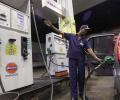
Petrol and diesel prices were hiked by 80 paise a litre each on Wednesday, taking the total increase in rates in 16 days to Rs 10 per litre.

While the impact on consumer sentiments is obviously positive, the issue is of what this does to under-recoveries of oil companies and competition.

The price of liquefied petroleum gas cylinders across all categories, including subsidised LPG, was on Wednesday hiked by Rs 25 per cylinder -- the third straight increase in rates in less than two months.

India's consumer price index (CPI)-based retail inflation rate is likely to have cooled further in June, thus remaining below the 4 per cent target of the Reserve Bank of India (RBI) for a fifth consecutive month, giving the central bank wiggle room to focus on growth. Economists reckon that the decline is on account of easing prices in various categories of goods, especially food items, and a favourable base effect.

The price reduction will be effective midnight tonight, announced Indian Oil Corp

Rural India outpaced urban centres in passenger vehicle sales in 2025, recording a growth of 12 per cent compared with 8 per cent in cities.
The fall in global oil prices has trimmed the losses of state-owned oil companies, but it may not be enough to prevent a Rs 4 per litre increase in diesel prices and a Rs 20-25 per cylinder hike in LPG rates later this month.

The fiscal tilt towards capex benefits companies in investment-related sectors like capital goods, defence equipment, engineering & construction and metal & mining. The planned cut in revenue expenditure will weigh on companies in consumption sectors like FMCG, consumer durables and retail.

Total fuel subsidies accounted for less than 1 per cent of GDP and under 3 per cent of total government expenditures in FY14.

In a much-needed relief to cash-strapped airlines, this is the second straight monthly reduction in rates and the biggest single cut ever.

The new Fortuner Neo Drive embraces a 48V mild-hybrid system for better refinement and modest efficiency, without diluting its rugged DNA.
Jet fuel or ATF price on Wednesday was cut by almost 6 per cent after four rounds of monthly increases since July, while commercial cooking gas (LPG) rates were raised by a steep Rs 101.5 per 19-kg cylinder in line with international benchmarks. However, the price of domestic LPG - used in household kitchens for cooking purposes - remained unchanged at Rs 903 per 14.2-kg cylinder. Aviation turbine fuel (ATF) price was cut by Rs 6,854.25, or 5.79 per cent, in the national capital to Rs 111,344.92 per kl from Rs 118,199.17, according to a price notification of state-owned fuel retailers.
Finance Minister Nirmala Sitharaman on Monday ruled out a cut in excise duty on petrol and diesel to ease prices, which have touched an all-time high, saying payments in lieu of past subsidised fuel pose limitations. Petrol and diesel as well as cooking gas and kerosene were sold at subsidised rates during the previous Congress-led UPA government. Instead of paying for the subsidy to bring parity between the artificially suppressed retail selling price and the cost that had soared because of international rates crossing $100 per barrel, the then government issued oil bonds totalling Rs 1.34 lakh crore to the state-fuel retailers. These oil bonds and the interest thereon are being paid now.
A week after the steep hike in petrol prices by Rs 5 a litre, the government on Monday said a ministerial panel is likely to meet in the next few days to take a decision on raising diesel, LPG and kerosene rates.

Auto majors Maruti Suzuki, Tata Motors and Mahindra & Mahindra reported robust sales in September as reduced price tags owing to GST rationalisation led to record demand in the Navaratri period. The month also saw Tata Motors and Mahindra & Mahindra settling at number two and three positions, respectively in vehicle wholesales ahead of Hyundai Motor India.
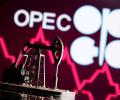
The surprise decision of OPEC and its allies, including Russia, to cut oil output may cause an immediate rise in prices, delaying revision in fuel prices in India, industry sources said. The grouping of Organisation of Petroleum Exporting Countries (OPEC) and its allies, called OPEC+, on Sunday decided to further cut oil output by around 1.16 million barrels. The move led to Brent rising by almost 6 per cent to $84.58 per barrel on Monday.

There will be corresponding price revisions on petrol and diesel in other states on account of change in dealer commission
Prices of both petrol and diesel rose for the first time in over 12 months as oil marketing companies raised rates to make up for rising cost of production. The rupee-dollar exchange rate also played spoilsport. Petrol price was on Monday hiked by 5 paise per litre and diesel by 10 paise a litre.
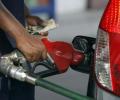
Petrol and diesel prices were hiked for the fourth consecutive day on Saturday by 35 paise per litre, pushing the total increase in rates on petrol to Rs 36 per litre and on diesel to Rs 26.58 since early May 2020 when taxes on the two fuels were raised to record levels. Petrol in Delhi now costs Rs 107.24 a litre and diesel comes for Rs 95.97, according to a price notification of state-owned fuel retailers. The latest increase that follows the unrelenting hike in international oil prices has pushed pump rates across the country to their highest-ever levels.
The government's three key allies Samajwadi Party, RJD and DMK along with Left parties and BJP on Friday demanded reduction of diesel and LPG prices in view of the decrease in the cost of international crude by nearly $100 over last few months.

The new Seltos has grown in size with a length of 4460mm and that's 95mm longer!
Consumers are having to pay more for transportation as petrol and diesel became costlier by about Rs 1.50 per litre
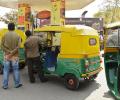
After hike in rates of petrol, diesel and LPG, the prices of CNG and cooking gas piped to household kitchens (PNG) in the national capital were hiked on Thursday by Re 1. CNG price in NCT of Delhi has been increased to Rs 59.01 per kg from Rs 58.01, according to the information posted on the website of Indraprastha Gas Ltd - the firm which retails CNG and piped cooking gas in the national capital. This is the third increase in CNG rates this month, which follows a spike in input (natural gas) prices across the globe.
Jet fuel or ATF price on Tuesday was hiked by a steep 8.5 per cent - the second increase in a month, while commercial cooking gas rate was cut by Rs 100 per cylinder in line with divergent trends in international benchmarks. Aviation turbine fuel (ATF) price was increased by 7,728.38 per kilolitre, or 8.5 per cent, in the national capital to Rs 98,508.26 per kl, according to a price notification of state-owned fuel retailers. Rates, which vary from state to state depending on the incidence of local sales tax or VAT, have been increased on firming up of global rates that followed four months of decline.
Petrol price has been cut by Rs 3.05 a litre.
Industrial production is expected to dip marginally in the next 3 months due to rupee gaining strength against the dollar and declining non-food credit, even as petrol and diesel might become cheaper, the Institute of Economic Growth said.
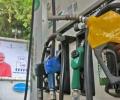
'The question often being asked is whether the demand for petrol and diesel is price inelastic?' asks Arun Balakrishnan, former chairman and managing director, Hindustan Petroleum.
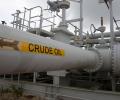
India has gained the least since Russia invaded Ukraine in February 2022 and was penalised the most, while the US, China and the European Union emerged as the biggest beneficiaries from the war.
Diesel prices may be hiked by Rs 10 per litre over a 10-month period and kerosene rates increased by same quantum over the next two years if a proposal being mulled in the Oil Ministry is accepted.

While this is a thoroughly modern SUV, the soul of the original '90s icon lingers.
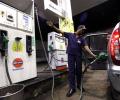
The movement of prices in international oil market and rupee-dollar exchange rate shall continue to be closely monitored

Retail rates of the fuel will now reflect international movement in oil prices.

The XUV 7XO comes with high tech features, comfort and safety but it will be interesting to see if 7XO can match the popularity of XUV 700, notes Rediff's Hemant Waje.

Petrol price was cut by Rs 2.43 per litre and diesel by Rs 3.60 a litre, the third reduction in rates this month.
Petroleum Minister Ram Naik hinted on Wednesday that fuel prices may come down further if the international crude prices of Brent fall to around $20-22 per barrel.\n\n\n\n
